Follow the latest AI and automation news
The Saudi Data and Artificial Intelligence Authority (SDAIA) recognized the importance of quantum computing early on amid accelerating global efforts to develop this technology. Through its academy, SDAIA has worked to build national capabilities in this field and enhance the readiness of Saudi professionals to keep pace with global advancements. In 2026, the SDAIA Academy implemented a range of programs and training courses, training over 70 specialists in quantum computing. Additionally, the academy launched a Quantum Computing Boot Camp in collaboration with King Fahd University of Petroleum and Minerals, aimed at enabling specialists to understand the fundamentals of quantum computing and utilize its modern tools.
The Saudi Data and Artificial Intelligence Authority (SDAIA), in collaboration with the Ministry of Education, has announced the opening of registration for the fourth cohort of the AI scholarship program. This initiative targets Saudi male and female students to study technology, data science, and artificial intelligence disciplines at universities ranked among the world's top 50, at the bachelor's, master's, and doctoral levels. The fields of study include AI, data science, robotics, machine learning, computer vision, natural language processing, big data, smart cities, generative AI, and information security in AI. The program aims to enhance Saudi Arabia's position in this field and support qualified national talent to compete globally.
The Saudi Data and Artificial Intelligence Authority (SDAIA) announced the opening of registration for the Personal Data Protection Track within the Data Regulatory Sandbox. This track aims to enable compliance with the Personal Data Protection Law and its Implementing Regulations through the National Data Governance Platform. Registration will remain open for two months. The track targets private entities with innovative products or services based on the processing of personal data, allowing them to test their products or services under regulatory supervision. Applicants must be licensed private entities operating in the Kingdom, and their products or services must involve the processing of personal data.
Alexandria-based startup Racore XYZ has launched three open-source models for Arabic business workflows: VEJI-V2, Wasl-1, and Siyaq-1. The first model, VEJI-V2, is a decision-support model with about 3.28 million trainable parameters, achieving an accuracy of 82.95% on a 522-question test subset. The second model, Wasl-1, targets cash-on-delivery orders in Egypt, while the third model, Siyaq-1, is designed to convert event streams into structured data. Racore focuses on small footprint models suitable for companies that cannot afford powerful AI servers.
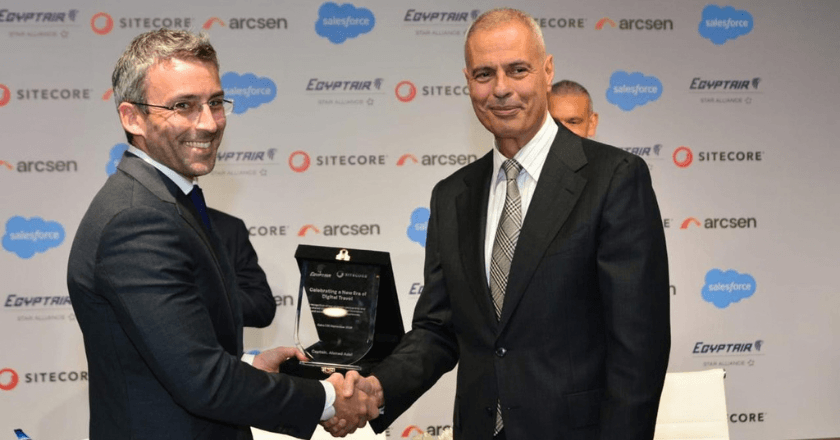
EgyptAir, the national carrier of Egypt, has selected SitecoreAI to enhance its digital customer experiences. This investment aims to support personalized communication and increase travel to Egypt as part of Vision 2030. The platform will help deliver tailored content across digital channels, enhancing passenger experiences. EgyptAir will utilize SitecoreAI, which integrates AI tools and content management in one place to streamline marketing operations. The platform supports omnichannel personalization, allowing brands to plan, create, and deliver content effectively. This will enable EgyptAir to provide real-time information to passengers.
OrbitronAI and Aramco Digital have announced a strategic partnership to develop and commercialize industrial-grade AI. The agreement was signed in early September 2026 at LEAP 2026 in Riyadh. The partnership aims to recover industrial value across asset-intensive industries, focusing on enhancing capital productivity and supply chain oversight. The companies will leverage OrbitronAI's technology to handle complex industrial information effectively. If successful at Aramco, these solutions could serve as a powerful reference for other heavy industries, fostering trust in AI for critical decision-making.
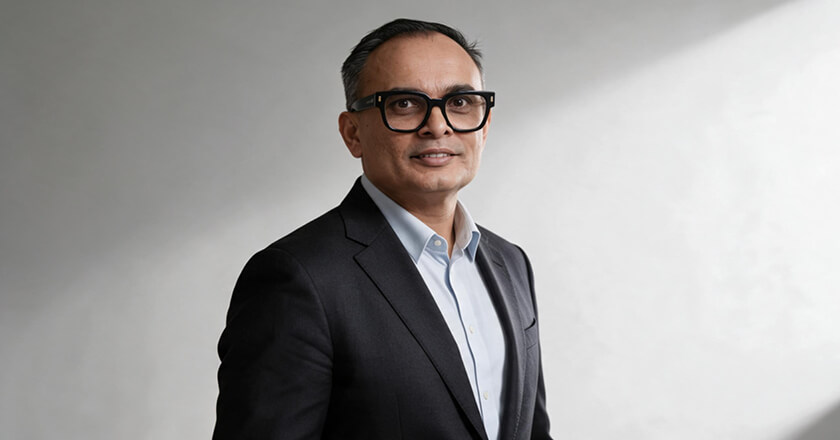
Uraz Farukh, Senior Vice President at Seclore, discussed evolving data governance requirements and AI-related security challenges at GISEC Global 2026. Seclore aims to expand its presence in the Middle East, Türkiye, and Africa, focusing on providing data protection solutions that align with AI requirements. This approach highlights the importance of enhancing cybersecurity amid increasing reliance on AI, enabling companies to improve their data protection strategies.
Napster, an AI agent company, has announced a partnership with HUMAIN to deliver Arabic-speaking AI agents to public and private organizations in Saudi Arabia and the Middle East. This collaboration integrates HUMAIN's ALLaM large language model, speech recognition, and text-to-speech technologies with Napster's multimodal platform. The initiative aims to enhance AI adoption in the region by providing Arabic-fluent digital employees.
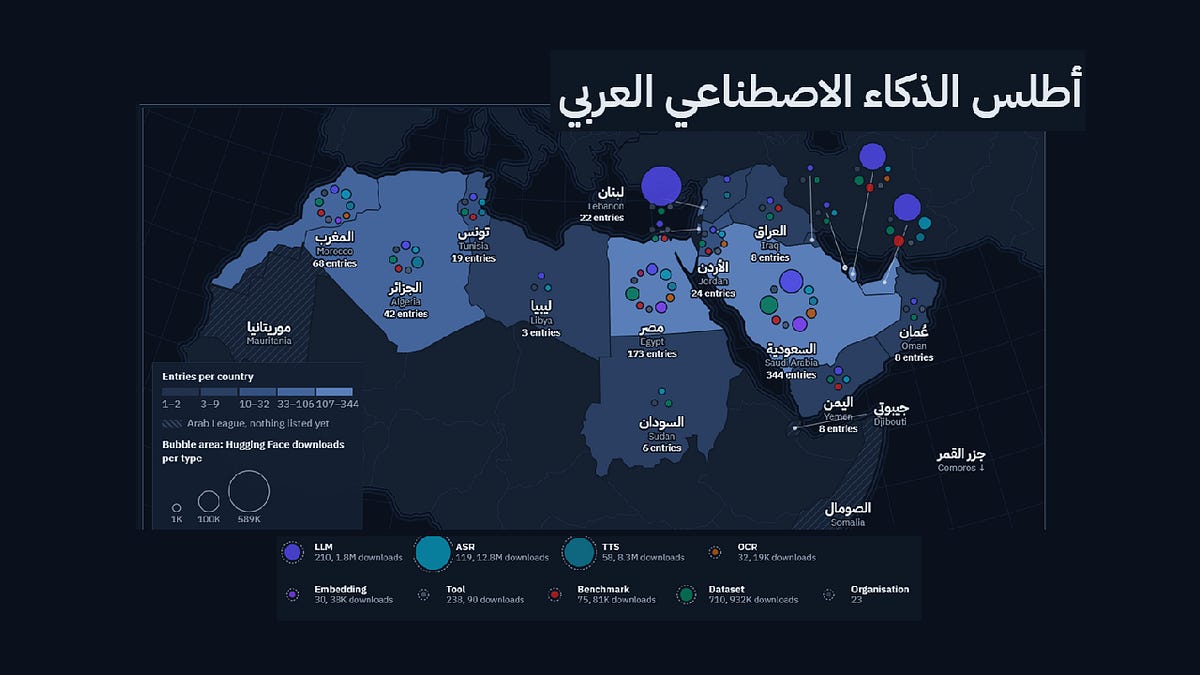
The Arabic AI Atlas has been launched as an open-source resource by Riyadh-based professional Hesham Haroon, featuring over 1,000 models and tools alongside 1,000 datasets. This initiative aims to provide developers with a reliable source for Arabic-capable code and datasets, aggregating data from platforms like Hugging Face and GitHub.
Qatar's national AI company Qai will host its advanced GPU infrastructure inside a Tier III certified data center managed by MEEZA. This agreement ensures that Qai's compute services and customer data remain in Qatar, adhering to national data protection regulations. MEEZA will provide high-density power and managed services covering operations, monitoring, and lifecycle management.
NVIDIA utilized the Saudi Audio Dataset for Arabic (SADA) to enhance its Nemotron 3.5 ASR speech recognition model for Saudi dialects. According to NVIDIA's developer blog, the word error rate for Saudi dialects dropped from 55% to 30%, significantly reducing transcription errors. The SADA dataset was developed in collaboration with the Saudi Data and Artificial Intelligence Authority (SDAIA) and the Saudi Broadcasting Authority, comprising around 667 hours of transcribed audio across more than 10 Saudi dialects. NVIDIA's results indicate that dialect accuracy roughly doubled without degrading performance in English or Modern Standard Arabic.
Google has announced the launch of a new feature called 'Guided Vision' within its Gemini Live service, aimed at assisting visually impaired individuals. This feature provides instant audio descriptions of what the phone's camera captures, helping users read small texts and better understand their surroundings.
Hamad Bin Khalifa University and the Qatar Computing Research Institute (QCRI) collaborated with Google DeepMind to host the second MenaML Winter School in Saudi Arabia. The event gathered researchers and experts in artificial intelligence from across the region for six days of rigorous learning and technical exchange.
The World Bank commended the Kingdom's progress in building a national data and AI ecosystem, represented by the Saudi Data and AI Authority (SDAIA). It regarded the Saudi experience as a benchmark for developing institutional models for data and AI governance, highlighting the role of institutional integration and national support in accelerating capacity building in this field. The World Bank dedicated a standalone case study to SDAIA's experience, examining the authority's role in governing the national data ecosystem and accelerating the adoption of AI technologies. The report noted the Kingdom's progress in adopting AI technologies, with an adoption rate among Saudi enterprises reaching approximately 28% in 2024, surpassing the average recorded by OECD countries.
Establishing global governance frameworks and ethical benchmarks for artificial intelligence has become a top international priority to ensure that technological advancements serve human-centric and equitable development. From September 14 to 17, 2026, President of the Cambodia Academy of Digital Technology, Seng Sopheap, led the Cambodian delegation at the 4th UNESCO Global Forum on the Ethics of Artificial Intelligence in Riyadh, which convened AI ministers and delegates from over 52 nations. During a closed-door ministerial discussion, Sopheap presented updates on Cambodia's evolving AI landscape, emphasizing national efforts to foster a comprehensive AI ecosystem. He also discussed strategies for national capacity building, focusing on digital human resource development and targeted investments in digital infrastructure.
HUMAIN, a Public Investment Fund company, announced its collaboration with EY, a global leader in professional services, to develop a new AI-native business process outsourcing service. This initiative aims to transform how enterprises deliver, manage, and scale their operations, with increasing integration of artificial intelligence into business processes. The new service will combine intelligent agents, automation, advanced analytics, and human expertise within integrated operating models. This initiative is expected to help organizations improve efficiency, accelerate decision-making, and unlock new growth opportunities.
King Abdullah University of Science and Technology (KAUST) has developed a computational prototype as part of a research project that uses artificial intelligence to reduce uncertainty in mineral exploration across Saudi Arabia. The project aims to deepen the understanding of geological formations beneath the resource-rich Arabian Shield. Led by Professors George Turkiyyah and David Keyes, in collaboration with geophysical imaging experts from the University of British Columbia in Canada, the project attracted the interest of Maaden, Saudi Arabia's national mining company. This led to a 30-month research and development contract, allowing for testing the model using actual Saudi geological data.
Minister of Communications and Information Technology Abdullah Alswaha held bilateral meetings in Seattle with leaders from Amazon Web Services (AWS) and Microsoft to discuss expanding the Kingdom's artificial intelligence infrastructure. During talks with AWS CEO Matt Garman, Alswaha reviewed the acceleration of the AI Zone developed in partnership with HUMAIN, deploying AWS Trainium accelerators within Saudi Arabia's computing ecosystem.
The world is turning its attention to Riyadh to discuss the future of artificial intelligence (AI) and its ethical implications, as Saudi Arabia continues its efforts to build a generation of national talent specializing in data and AI, placing responsibility and ethics at the core of technological development. These efforts coincide with the fourth UNESCO Global Forum on the Ethics of Artificial Intelligence, where Saudi specialists and researchers are developing AI technologies, focusing on issues such as system reliability, fairness, and addressing challenges related to digital bias and data protection.
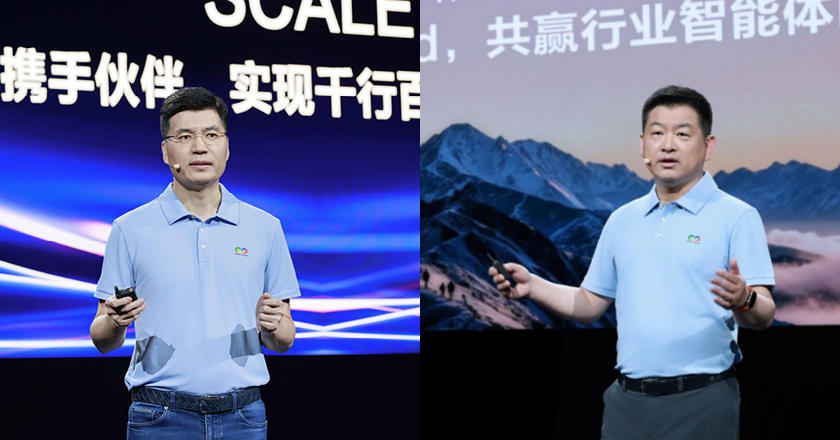
Huawei announced the launch of new AI infrastructure at Huawei Connect 2026 in Shanghai, featuring services like the AI Cluster Service and Agentic Model as a Service. These developments are designed to enhance organizations' capabilities to implement AI at scale. This initiative comes as demand for computing capacity and secure infrastructure rises in the Middle East, with governments and enterprises shifting from AI experimentation to practical implementation. The new system has already served over 3,500 customers, showcasing its market success.
Morocco's Ministry of Digital Transition and Administrative Reform has announced the release of the first open-source AI tools in partnership with French company Mistral. The tools include a language identification classifier and a speech recognition model, facilitating the handling of Moroccan Darija. This initiative aligns with Morocco's Digital 2030 strategy and the AI Made in Morocco roadmap, led by Minister Amal El Fallah Seghrouchni. The new tools aim to support Moroccan developers and companies in creating AI applications capable of understanding Darija.
Invest Qatar has announced a partnership with the U.S. company Brain Co to enhance AI adoption in Qatar. This partnership will support pilot programs aligned with Qatar's Third National Development Strategy and National AI Strategy, focusing on talent development. Invest Qatar will assist Brain Co in opening a flagship office in Qatar and expanding into the region. The company has already launched an AI-powered building permit system with the Ministry of Municipality, reducing approval times from 30 days to 120 minutes.
Google has announced its collaboration with the International Telecommunication Union (ITU) to provide 100,000 scholarships for AI courses across more than 80 countries, revealed during the UN General Assembly on September 22. The scholarships will be distributed through local governments and the ITU-UNICEF Giga initiative, addressing the need for basic digital skills training for 1.2 billion people.
Microsoft has announced an investment of over $10 billion in the UAE, Saudi Arabia, Qatar, and Kuwait by 2030, adding approximately $2 billion to previous commitments. This investment includes expanding cloud and AI infrastructure, along with over $400 million in subsea and terrestrial connectivity. This announcement marks Microsoft's first major update since the US-Iran conflict began in February, focusing on enhancing digital resilience. This framing emphasizes the importance of business continuity, which is a priority for Gulf governments and enterprise customers.
Octave Klaba, CEO of OVHcloud, stated that operators of proposed AI supercomputing factories in Europe need annual revenues between 300 and 400 million euros to break even. He explained that the proposed public commitment of 200 million euros for AI services over five years is insufficient to support the necessary private investments for these facilities. The public sector is expected to purchase computing services worth 40 million euros annually, while operators need to spend at least 600 million euros on chips alone.
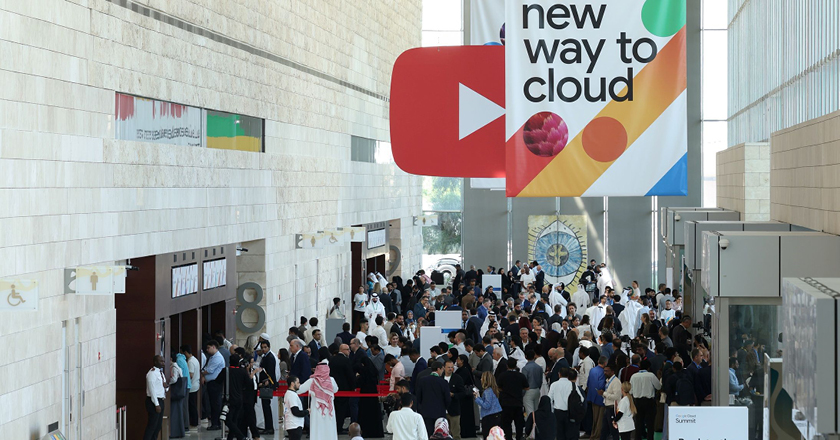
At the Google Cloud Summit Doha 2026, Google Cloud announced the launch of the Innovation Lab (iLab) and the National Skilling Program in partnership with the Qatar Digital Academy. The event, held at the Qatar National Convention Centre, gathered over 2,000 technology executives to review the integration of Gemini Enterprise across key industries.
NVIDIA has confirmed that Egypt has the necessary components to become a regional hub for AI application development, highlighting the current phase as an opportunity to accelerate the local ecosystem. Ulu Guillemin, NVIDIA's VP for Europe, the Middle East, and Africa, stated that the world is at a pivotal moment in technology, with direct implications for individual lifestyles and economic development. Guillemin explained that his visit aims to explore Egypt's plans for AI deployment, asserting that the timing is right for this initiative, focusing on infrastructure development and enhancing local innovation.
NVIDIA is enhancing its presence in Egypt with the expansion of the local AI ecosystem, coinciding with plans to establish data centers and AI factories that will provide the necessary computing capabilities for developing models and applications within the country. AI developers and Egyptian startups gathered at the Grand Egyptian Museum during an event hosted by NVIDIA, featuring leaders from the company and firms in healthcare, robotics, cybersecurity, and financial services.
United Arab Emirates University, in collaboration with the Technology Innovation Institute in Abu Dhabi, has launched PhysAI-Bench, a new benchmark testing AI models' ability to make real-time decisions as autonomous drone pilots. Utilizing 10,178 decision points from actual UAV missions, the benchmark evaluated 29 models from 14 AI organizations, including OpenAI and Google.
TokenAI has launched the Horus Taleeq 0.2B model, an open-source small language model exclusively in Arabic, along with its training code and data sources under an MIT License. The model was trained from scratch on 6 billion Arabic tokens over 30 hours on a single NVIDIA RTX PRO 6000 Blackwell server. However, the model is only at the pre-training stage, lacking instruction tuning or safety alignment.